
Who Makes the Chore Chart in Utopia? Part 1
Mutual aid, hidden labor, and the Silver Age work of regenerative hospitality.

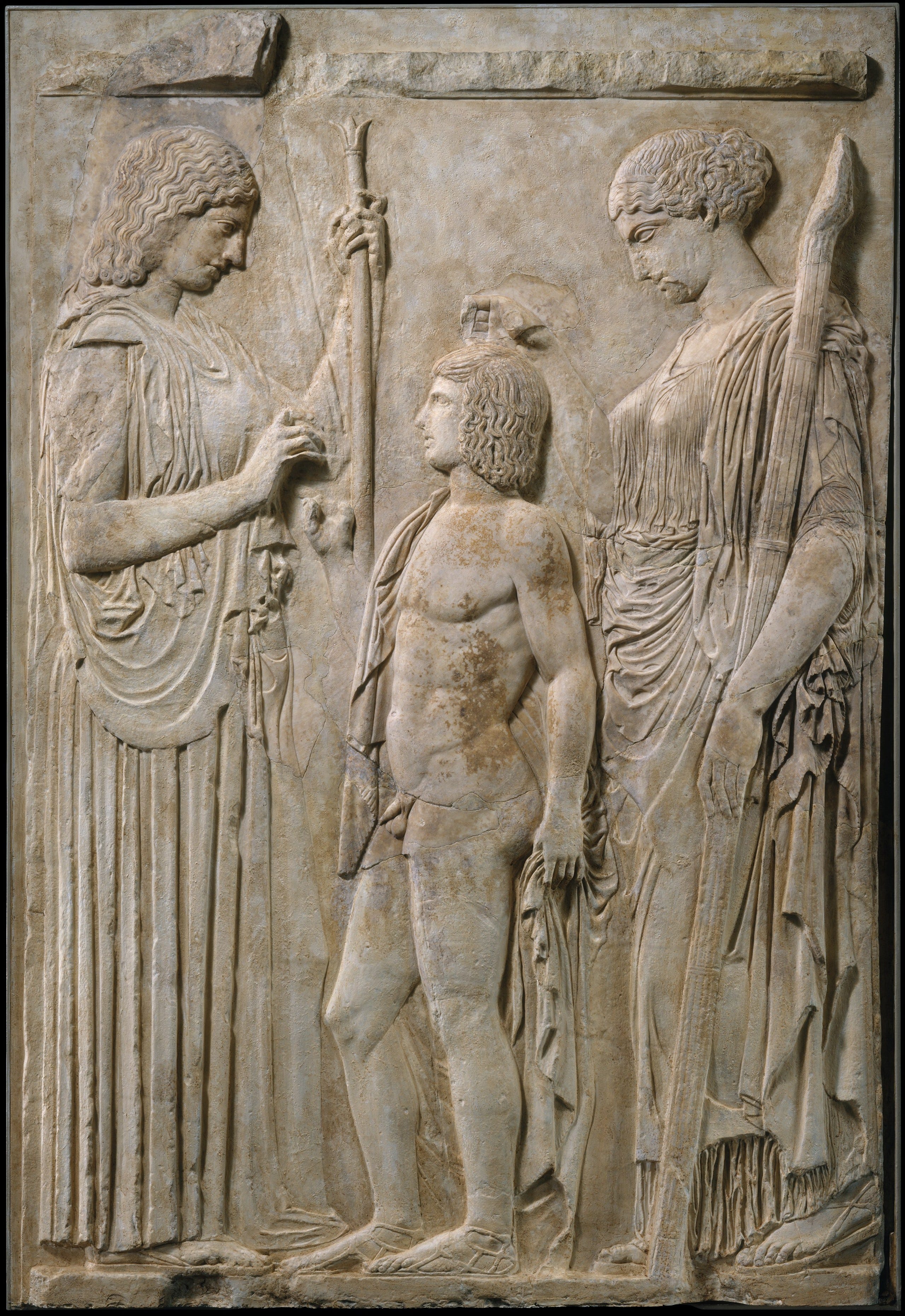
Ten marble fragments of the Great Eleusinian Relief, Roman, ca. 27 BCE-14 CE. Public Domain, The Metropolitan Museum of Art.
In Ovid’s Metamorphoses, the Golden Age is almost useless as a model for a living community.
It is beautiful, but it has no operational burden. The earth gives food without being worked. Spring never ends. No one needs a court, a boundary, a weapon, a schedule, a payroll, a maintenance plan, or a conversation about whose turn it is to clean the kitchen. It is not society yet. It is abundance before coordination.
The Silver Age is where the work begins.
Jupiter shortens the endless spring into seasons. Heat arrives. Winter arrives. People need houses. Seeds have to be planted in furrows. Animals are yoked. Food no longer appears as a gift from an always-gentle earth; it has to move through weather, timing, shelter, labor, tools, and shared obligation.
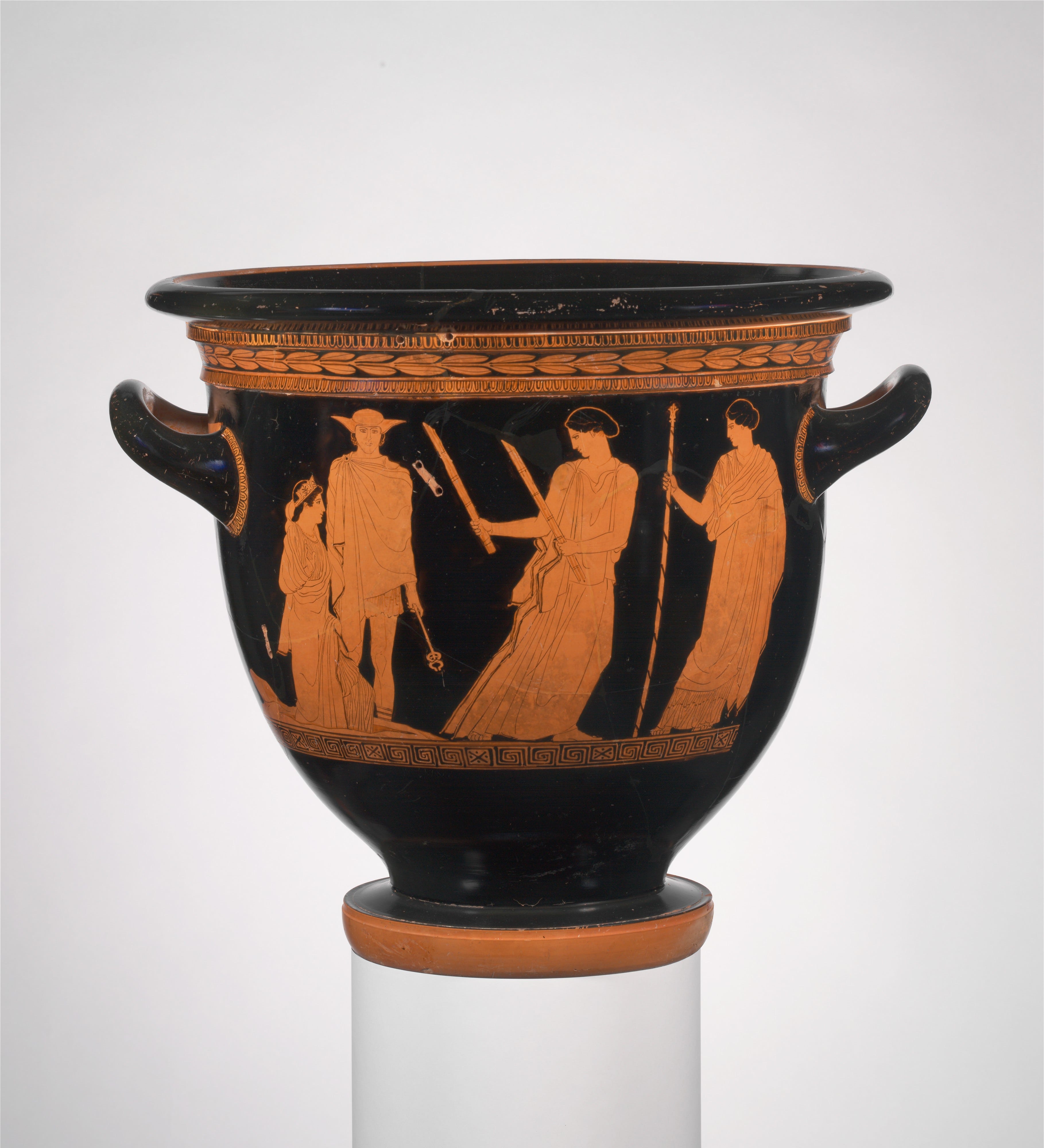
Terracotta bell-krater, attributed to the Persephone Painter, Greek, Attic, ca. 440 BCE. Persephone ascends from the underworld: a mythic image of seasonality replacing permanent spring. Public Domain, The Metropolitan Museum of Art.
This is why the Great Eleusinian Relief is the right image for the first note in this series. Demeter and Persephone stand over Triptolemos, the figure sent to teach humanity how to cultivate grain. The gift is not simply food. It is the passage from divine abundance into agricultural knowledge: timing, technique, initiation, inheritance, and a social order capable of remembering what the field requires.
That is much closer to the economy of eco-farms, retreat lands, ranch hotels, and off-grid communities. These places are not actually living inside pure paradise. They are trying to build a livable society after paradise has already become seasonal.
This is where many utopian projects quietly misread their own ambition. Everyone wants to rebuild civilization as a return to the Golden Age: effortless abundance, natural harmony, work dissolved into beauty, society healed by the radiance of the right place. But most attempts to reenact paradise fail because paradise has no operating manual. It does not teach anyone how to coordinate scarcity, disagreement, fatigue, weapons, maintenance, payroll, hierarchy, or rain.
A humbler and more serious task is to build toward the Silver Age: not the crown jewel of the myth, but the first age where society has to become designed.
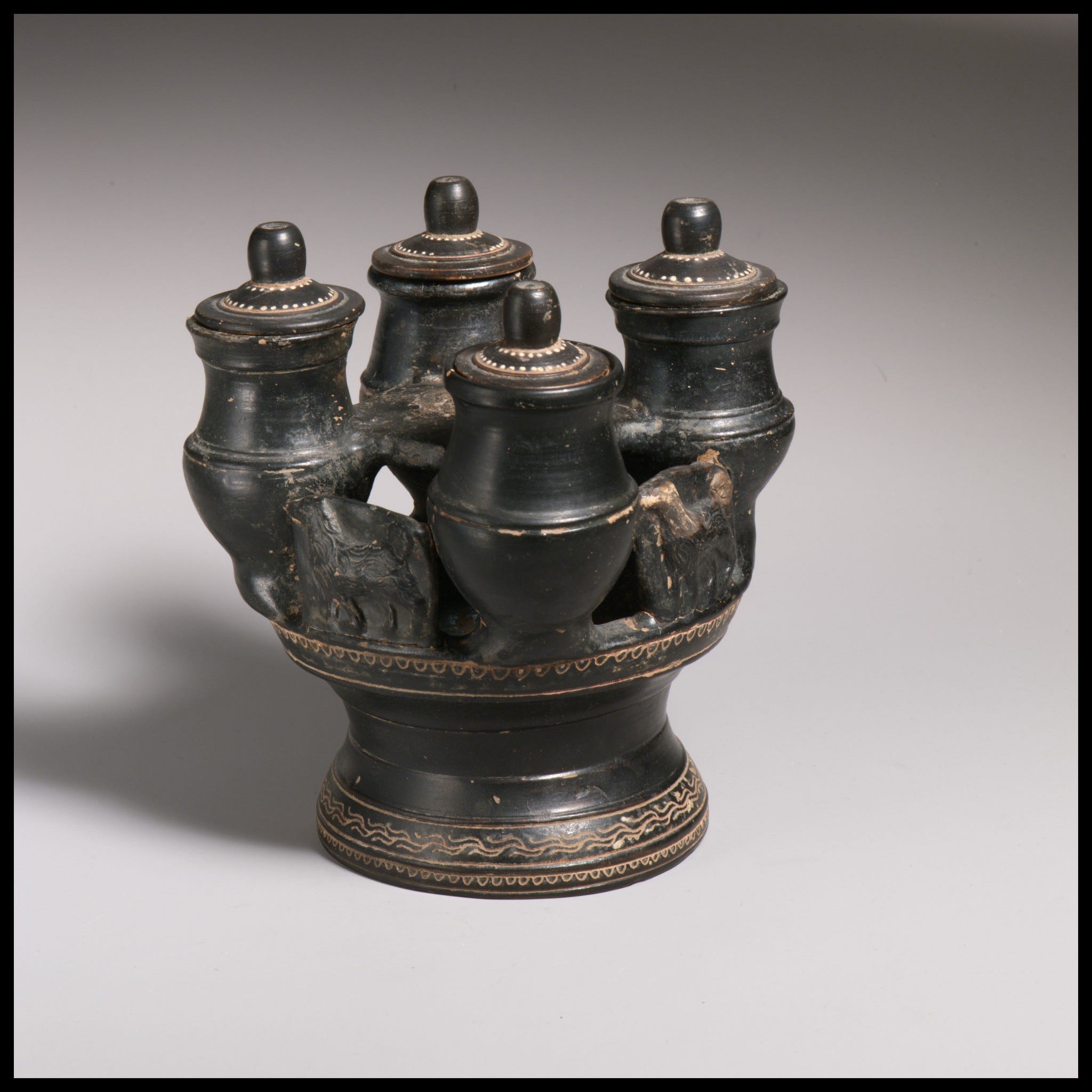
Terracotta kernos, Greek, South Italian, Campanian, ca. 330-300 BCE. Its small cups held votive offerings such as wheat or barley: abundance given form through ritual containers. Public Domain, The Metropolitan Museum of Art.
Because the Golden Age fantasy is tempting. It says that if the land is beautiful enough, if the people are sincere enough, if the food is grown nearby and the architecture is natural and the values are high, coordination will become effortless. The project will be held together by care.
But real land projects live in the Silver Age with a little Bronze mixed in. There are seasons, deposits, guests, neighbors, liability, tools, vehicles, food costs, injury risks, status differences, and, especially in America, the background reality of weapons and security. The work has to be done by someone. The rules have to be carried by someone. The emotional weather has to be interpreted by someone.
Every beautiful land project eventually discovers the same uncomfortable thing: the work begins before anyone has agreed to call it work.
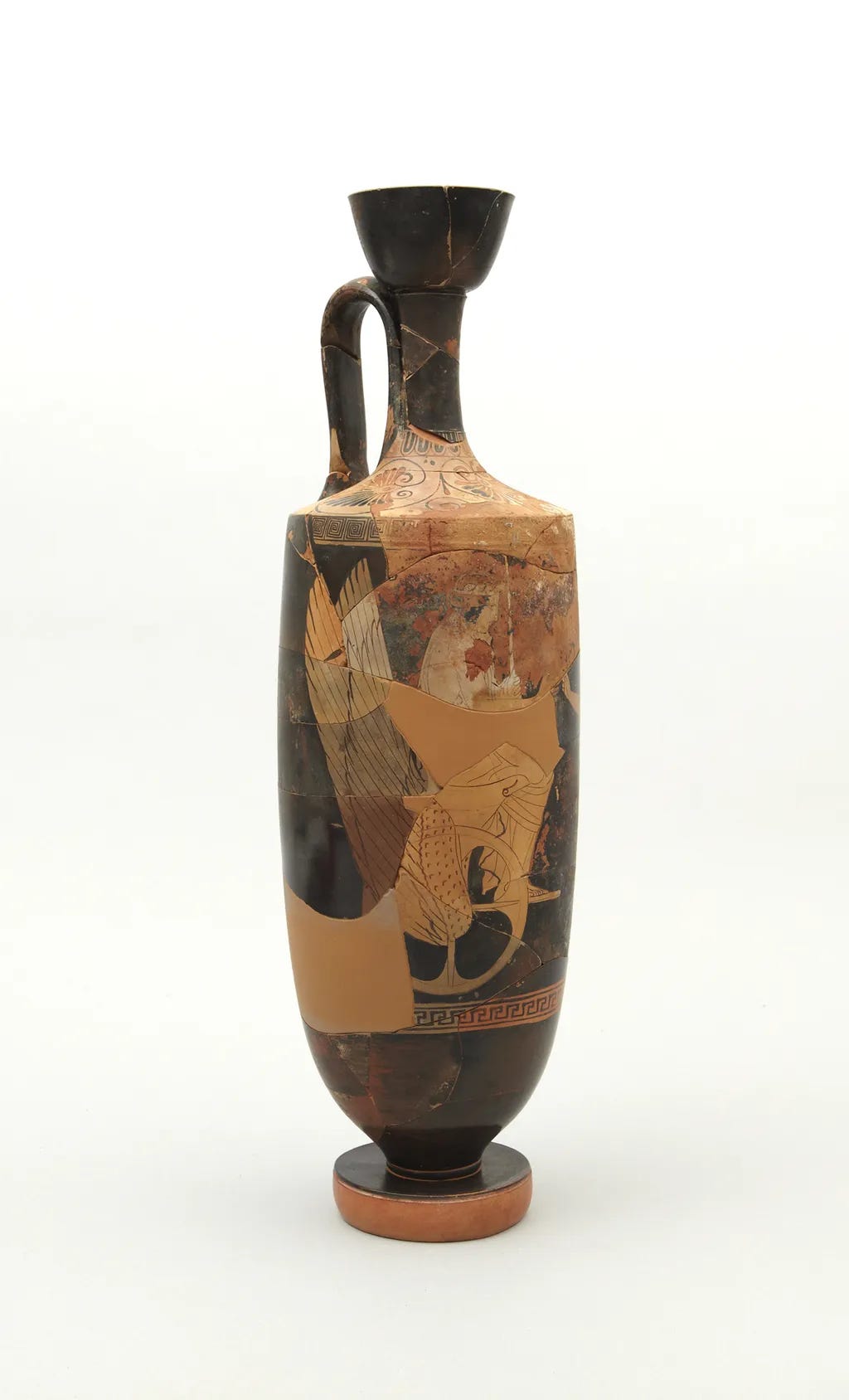
Red-figure lekythos: Triptolemos and Demeter, Greek, Attic, attributed to the Phiale Painter, ca. 435-430 BCE. The civilizing gift of agriculture appears as instruction, not magic. Public Domain image, Princeton University Art Museum.
Someone comes for a weekend and helps cook dinner. A friend stays for two weeks and fixes a fence. A retreat participant starts arriving early to set up chairs. A volunteer becomes a resident. A resident becomes the person who knows where the linens are, which neighbor is angry, which gate sticks in the rain, and which guest needs to be gently redirected before they wander into the compost system with a camera.
At first, this feels like the proof that the place is alive.
The founder looks around and sees community. People helping. People belonging. People choosing to participate in something more meaningful than a normal hotel, a normal job, a normal weekend away.
And in many cases, that is exactly what is happening. There is real generosity in these places. People want to touch soil. They want to be useful. They want to belong to a project that feels less extractive than the rest of the world.
But the moment a place accepts guests, deposits, members, apprentices, investors, press attention, or a waitlist, goodwill enters a new legal and emotional climate.
The trouble is not that people are helping.
The trouble is that nobody has designed the system that explains what helping means.
This is one of the central tensions inside the Regenerative Stay Economy: land-based projects sell intimacy, participation, and belonging long before they have built the role architecture that can keep those promises honest.
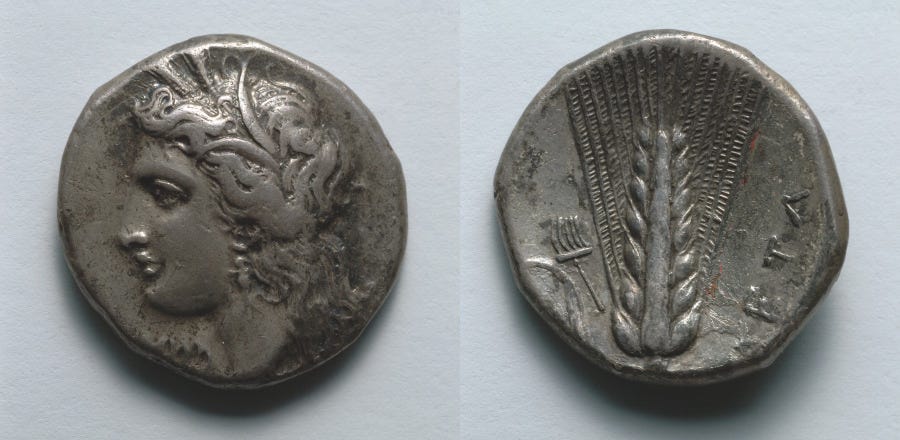
Stater: Head of Demeter (obverse); barley (reverse), Greek, minted at Metapontion, 330-300 BCE. Even grain enters circulation through symbols, measures, and shared trust. CC0, The Cleveland Museum of Art.
Part two begins inside that beautiful confusion: the strange middle category between hotel, farm, workplace, school, commune, and family.
Cleaner archive edition on Commonwealth: https://commonwealth.la/field-notes/who-makes-the-chore-chart-in-utopia/